

Defining user personas: designing for someone, not everyone.
Semi-fictional characters that embody the needs, characteristics, and motivations of your key audience segments — the foundation under every targeted decision.
Original article ↗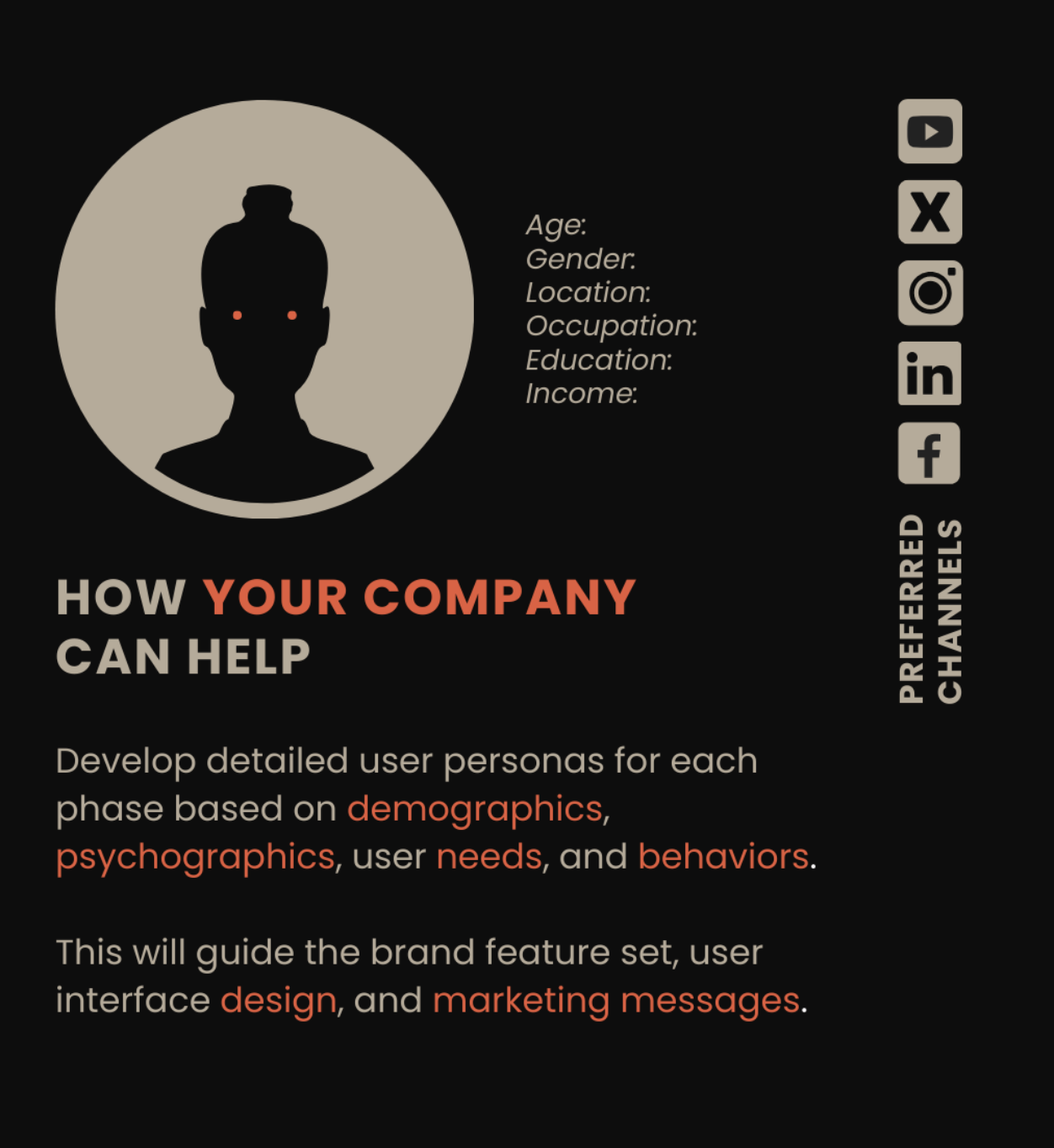
Personas give every team the same picture of who they serve. The payoff is multifaceted: sharper focus, better product decisions, more efficient campaigns, and content that speaks to real interests instead of averages.
How to build one
1 · Gather data
Market research, surveys and interviews, analytics — evidence before imagination.
SOURCES — RESEARCH · INTERVIEWS · ANALYTICS2 · Identify patterns
Recurring themes in challenges, goals, and demographics become your segments.
3 · Detail the persona
Demographics, psychographics, goals and challenges, preferred channels, brand interaction.
FIELDS — AGE · ROLE · GOALS · CHANNELS4 · Bring it to life
A name, a face, a day-in-the-life narrative — relatable enough that teams argue on its behalf.
Then use it everywhere
Feature prioritization, content strategy, campaign targeting, support training — a persona only earns its keep when it shapes decisions across the whole organization, and it stays alive only if you revisit it as the market moves.
A persona is not a deliverable. It’s an agreement about who you’re building for.Next: What is branding? →